
After Effects Dynamic Link Premiere Ram Preview
Ever found yourself in the middle of a video edit, staring at a timeline that’s more chaotic than a TikTok algorithm update, only to realize you’ve lost the original footage? Yeah, we’ve all been there. But what if I told you there’s a way to keep your project and your sanity in sync—no more frantic file searches, no more "did I save this?" panic attacks? Enter Dynamic Link in After Effects, your new best friend for seamless Premiere Pro collaboration.
What Even Is Dynamic Link?
Think of Dynamic Link as the Wi-Fi of your video workflow—it lets After Effects and Premiere Pro talk to each other in real time, without needing to export or re-import files. No more jumping between apps like a caffeinated squirrel. It’s like having a telepathic connection to your own projects, minus the psychic bills.
How It Works (Without the Jargon)
Here’s the magic: you open a Premiere Pro project, drag a clip into After Effects, and—poof—the motion graphics or effects you create in After Effects update instantly in Premiere. No rendering, no waiting, no "why is this taking forever?" moments. It’s like editing with a superpower, but with fewer capes.
Must Read
The best part? You can tweak things on the fly. Need to adjust a title animation? Change it in After Effects, and Premiere Pro reflects the change in seconds. It’s the creative equivalent of a smooth jazz playlist—effortless and relaxing.
Why Your Workflow Will Thank You
Let’s be real: switching between apps can feel like herding cats. Dynamic Link cuts out the middleman. No more "I saved it in the wrong version" disasters or "I thought I exported this" regrets. It’s like having a personal assistant who’s also a time-traveler.
Plus, it’s a game-changer for collaboration. Share a project with a teammate, and they can see your After Effects work right in Premiere Pro. It’s the digital equivalent of passing notes in class—except way more productive.
Pro Tips to Make It Work for You
1. Enable Dynamic Link First: Before you start, make sure it’s turned on in both apps. In After Effects, go to File > Project Settings > Dynamic Link and check the box. In Premiere Pro, it’s under File > Project Settings > Dynamic Link. Yes, it’s the same menu—Adobe’s sense of humor.
2. Use Composition Settings Wisely: When you drag a clip into After Effects, pay attention to the composition settings. If you’re working with a 1080p clip in Premiere but set your comp to 4K, you’ll end up with a blurry mess. Keep it consistent, or you’ll be chasing down quality issues like a detective in a noir movie.
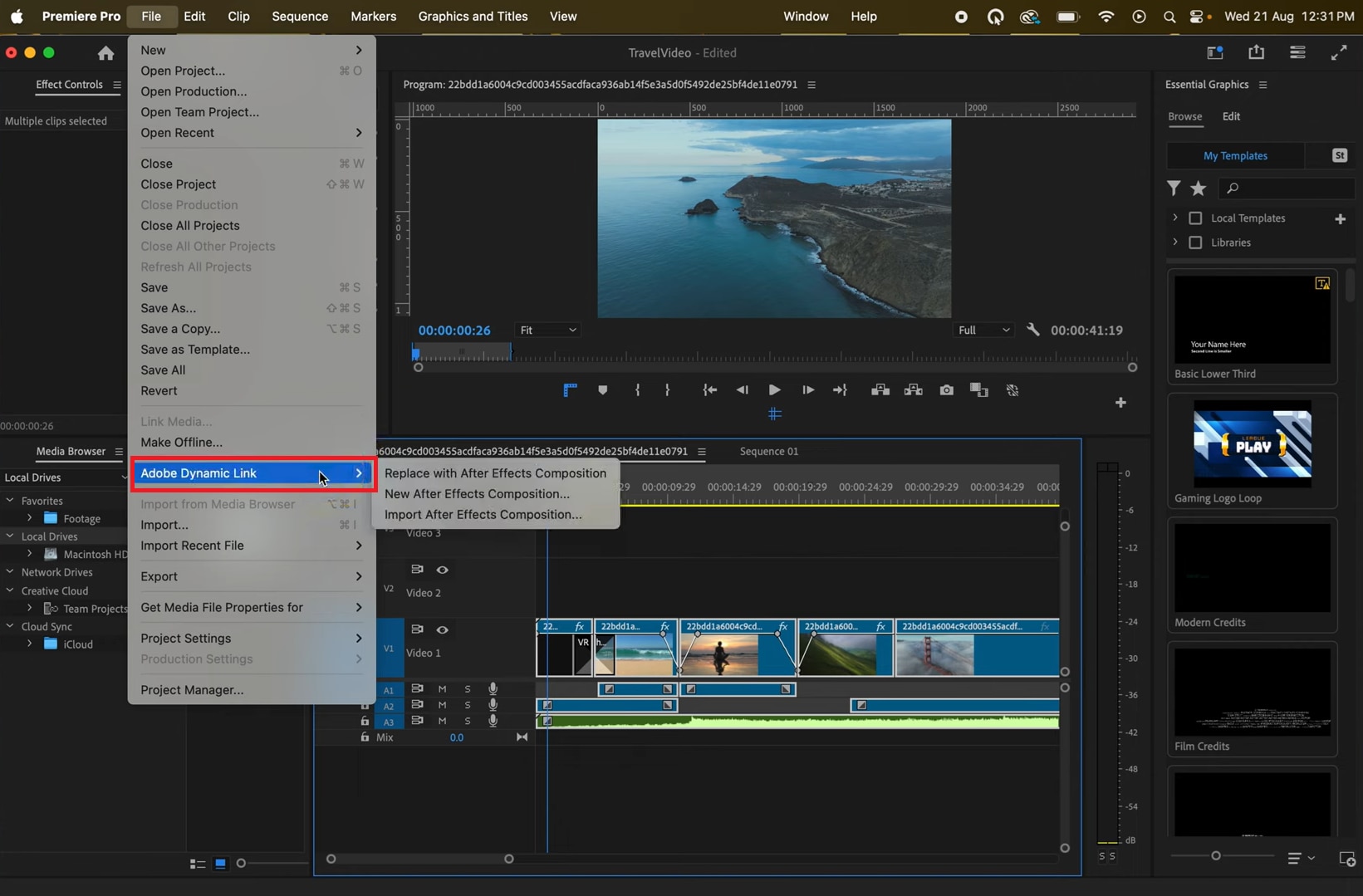
3. Render Smartly: Dynamic Link is great for previews, but if you’re rendering out final footage, do it in After Effects. Premiere Pro’s render settings can be a bit wonky for complex effects. Think of it like choosing the right tool for the job—hammer for nails, not screws.
When to Avoid Dynamic Link
Not every project is a Dynamic Link candidate. If you’re working with 3D layers, complex camera tracking, or heavy GPU rendering, the link might slow things down more than it helps. In those cases, stick to traditional rendering or use Merge Composition instead.
Also, if you’re collaborating with someone who’s not using the same software, Dynamic Link won’t work. It’s like trying to text someone who only speaks Morse code—frustrating for everyone involved.
A Little Fun Fact
Did you know Dynamic Link was introduced in After Effects CS6 and Premiere Pro CS6? That’s right—it’s been around since the days when "selfie" wasn’t a verb yet. Adobe’s been playing the long game, and now we’re all reaping the benefits.
Real-Life Example: The "I Forgot to Save" Nightmare
Picture this: You’re editing a music video, and you’ve spent hours animating text effects in After Effects. You hit Ctrl+S (or Cmd+S if you’re fancy), but then—disaster. You close the project, reopen it, and the After Effects file is missing. With Dynamic Link, this would’ve been a non-issue. The changes would’ve been locked in Premiere Pro, and you’d just keep editing. No panic, no lost work.

Dynamic Link vs. Traditional Rendering
Traditional rendering is like baking a cake from scratch—delicious, but time-consuming. Dynamic Link is more like using a microwave: quick, efficient, and you can keep making adjustments without waiting for the oven to preheat.
That said, Dynamic Link isn’t for every step of the process. Use it for previews, tweaks, and collaborative work, but save the heavy rendering for when you’re ready to finalize. It’s like knowing when to use a spoon vs. a chainsaw.
The Human Touch
At the end of the day, tools like Dynamic Link are all about making the creative process smoother, not just faster. They’re the difference between feeling like a genius and feeling like you’ve just survived a video editing marathon.
So next time you’re stuck in a workflow rut, remember: Dynamic Link is your secret weapon. It’s not about replacing your creativity—it’s about giving you the freedom to focus on what really matters: the story, the vision, the magic. And honestly, that’s what editing is all about.
Now go forth and link dynamically.