
How Much Data Does Google Maps Take
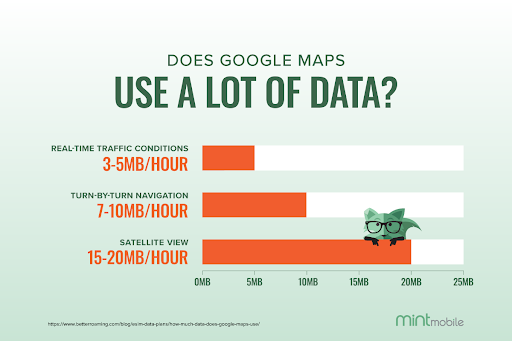
Ever wondered how much data Google Maps slurps up when you're navigating your way around town? I mean, it's not like we're asking it to solve world peace or anything, right? So, let's dive in and find out what's going on under the hood of this nifty little app.
First Things First: What's the Big Deal?
Well, for starters, data is like the fuel that keeps Google Maps running. It's what helps us avoid traffic jams, find the nearest pizza joint, and even figure out how to pronounce that street name we've been butchering all day. But how much data are we actually talking about here?
Let's Get Down to Business: The Numbers Game
Alright, so here's the deal. When you're using Google Maps, you're typically looking at around 0.5 to 1 MB of data per minute. That's not too shabby, right? To put that into perspective, think about it this way: if you were to stream a song on Spotify, you'd be using about 2 MB per minute. So, Google Maps is being quite the data-lightweight, wouldn't you say?
Must Read
But wait, there's more! Let's talk about when you're using turn-by-turn navigation. In this case, Google Maps can use up to 2 MB of data per minute. That's still not enough to make your data plan cry uncle, but it's something to keep in mind if you're in an area with spotty coverage or you're trying to conserve data.
What's Eating Up All That Data?
Now that we've got the numbers down, let's talk about what's actually using up all that data. I mean, Google Maps isn't just sitting there twiddling its thumbs, right?
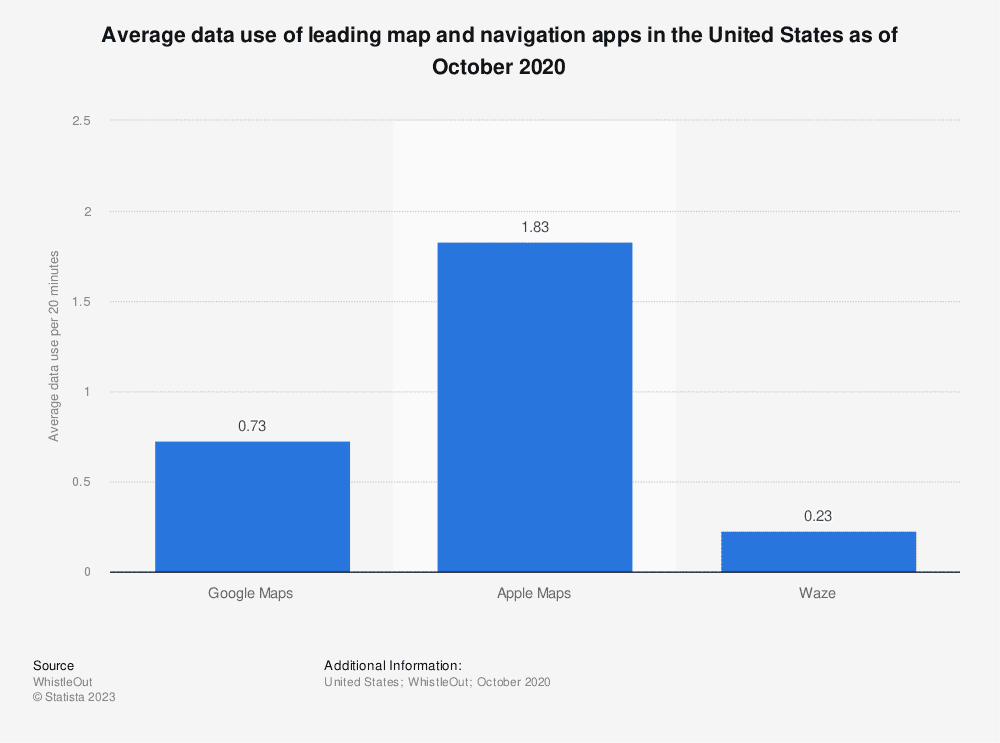
First off, there's the map data itself. Google Maps needs to load all those streets, landmarks, and cute little icons that make it look so darn pretty. Then, there's the real-time traffic data, which is constantly updating to keep you from sitting in gridlock. And let's not forget about all those businesses and points of interest that Google Maps is showing you - that data's got to come from somewhere!
But here's the thing: Google Maps is designed to be efficient. It only loads the data that you need, when you need it. So, if you're zoomed out and just looking at a general area, Google Maps isn't going to waste data loading up every single street and building. It's like having a smart roommate who only turns on the lights when you need them.
But What About Offline Maps?
Great question! If you're using offline maps, you're looking at a much bigger data hit. We're talking around 100 MB to 200 MB for a single city. But think about it this way: you're getting an entire city's worth of map data for the price of a few songs on Spotify. Not a bad trade-off if you ask me.
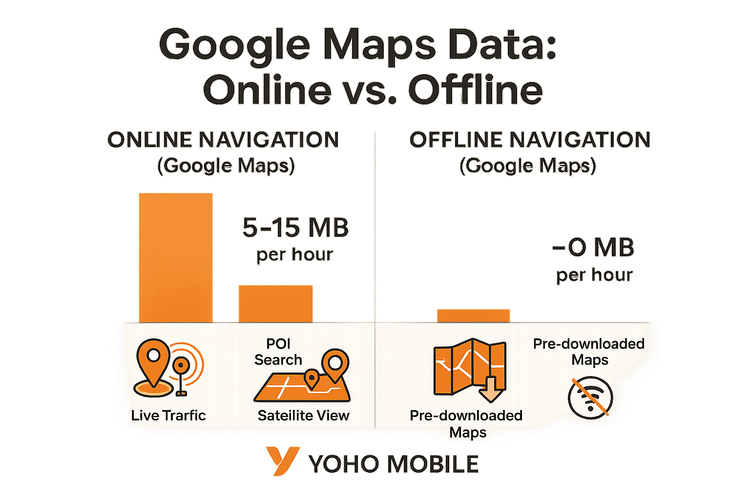
And here's the thing: even with offline maps, Google Maps is still being pretty stingy with its data usage. It only loads the data that you need, based on where you're going and how you're moving. So, if you're just sitting at home looking at the map, Google Maps isn't going to waste data loading up areas you're not interested in.
So, Is Google Maps a Data Hog or a Data Diet?
Well, it's safe to say that Google Maps is more of a data diet than a data hog. Sure, it uses some data, but it's not exactly guzzling it like a thirsty camel. And when you consider all the awesome stuff it does - like helping you find your way, avoiding traffic, and discovering new places - it's easy to see why Google Maps is worth every byte.
So, the next time you're using Google Maps, don't worry about it sucking up all your data. Just sit back, relax, and let it guide you to your next adventure. And who knows? Maybe you'll even learn a thing or two about data usage along the way.